

At BrightHaven, we believe that support for pet parents and caregivers should be available to everyone — freely, without barriers. That’s why we’re honored to share some of our most cherished resources here. These guides reflect decades of BrightHaven’s work in holistic animal care, hospice support, and end-of-life education.
They are simple, heartfelt tools created to bring comfort, reassurance, and practical wisdom to anyone caring for animals with chronic illness, difficult diagnoses, or the natural challenges of aging. Our hope is that you will find strength and peace in these words, and that they help you make every moment with your beloved companion count.
🌟 Please feel free to download these resources and share them with friends, family, and veterinary professionals who may also benefit.
Each of the resources below was created from BrightHaven’s years of hands-on experience with animals and the families who love them. They are practical tools, designed to help you feel more prepared, more confident, and more at peace as you walk this journey with your companion.

The BrightHaven Menu for Healing
The Menu for Healing is one of BrightHaven’s most foundational teachings. Affectionately known as the “Love Sandwich,” this guide begins and ends with love — reminding us that love is the most powerful healing force in all stages of life.
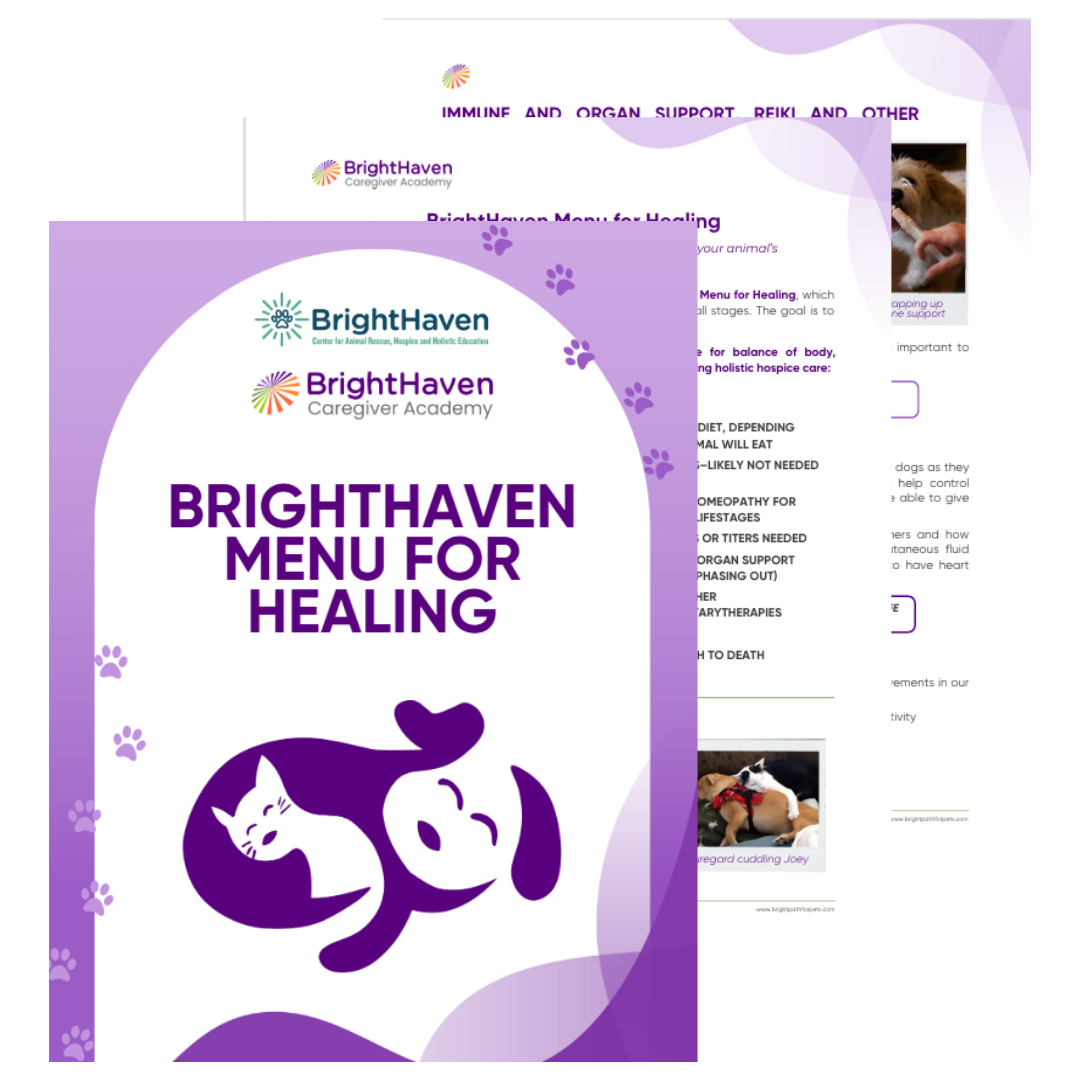
Inside, you’ll find guidance on:
- Nutrition and diet for animals of all ages, including those in hospice.
- Using homeopathy and other gentle therapies.
- The role of diagnostics in balanced decision-making.
- Reiki, organ support, and environmental comfort care.
- Preventive choices such as vaccination and titers.
- The philosophy of supporting a natural transition at the end of life.
This guide is more than a list of steps — it’s a way of life that embraces the whole being: body, mind, and spirit. It reflects BrightHaven’s belief that animals can live well — and leave this world peacefully — when surrounded by love and gentle care.
Holistic Animal Hospice Care
Tips for Helping Your Animal to Pass Peacefully
Caring for a beloved animal as they approach the end of life can be both tender and overwhelming. This guide was created to help pet parents and caregivers feel supported through this sacred chapter.

The Tips for Helping Your Animal to Pass Peacefully offers practical hospice guidance rooted in BrightHaven’s decades of experience. Inside, you’ll find gentle reminders and steps to help you:
- Create comfort and dignity in your pet’s final days.
- Recognize when your animal may be showing readiness to transition.
- Support both physical needs and emotional/spiritual well-being.
- Balance natural death as a valid choice with the option of euthanasia if pain or crisis arises.
- Honor your pet’s journey with love, patience, and presence.
This booklet is both practical and deeply reassuring, helping families understand that they are not alone in this process. Many readers have said that simply knowing what to expect — and how to respond with compassion — has eased their fear and anxiety.
The BrightHaven Menu for Self-Care
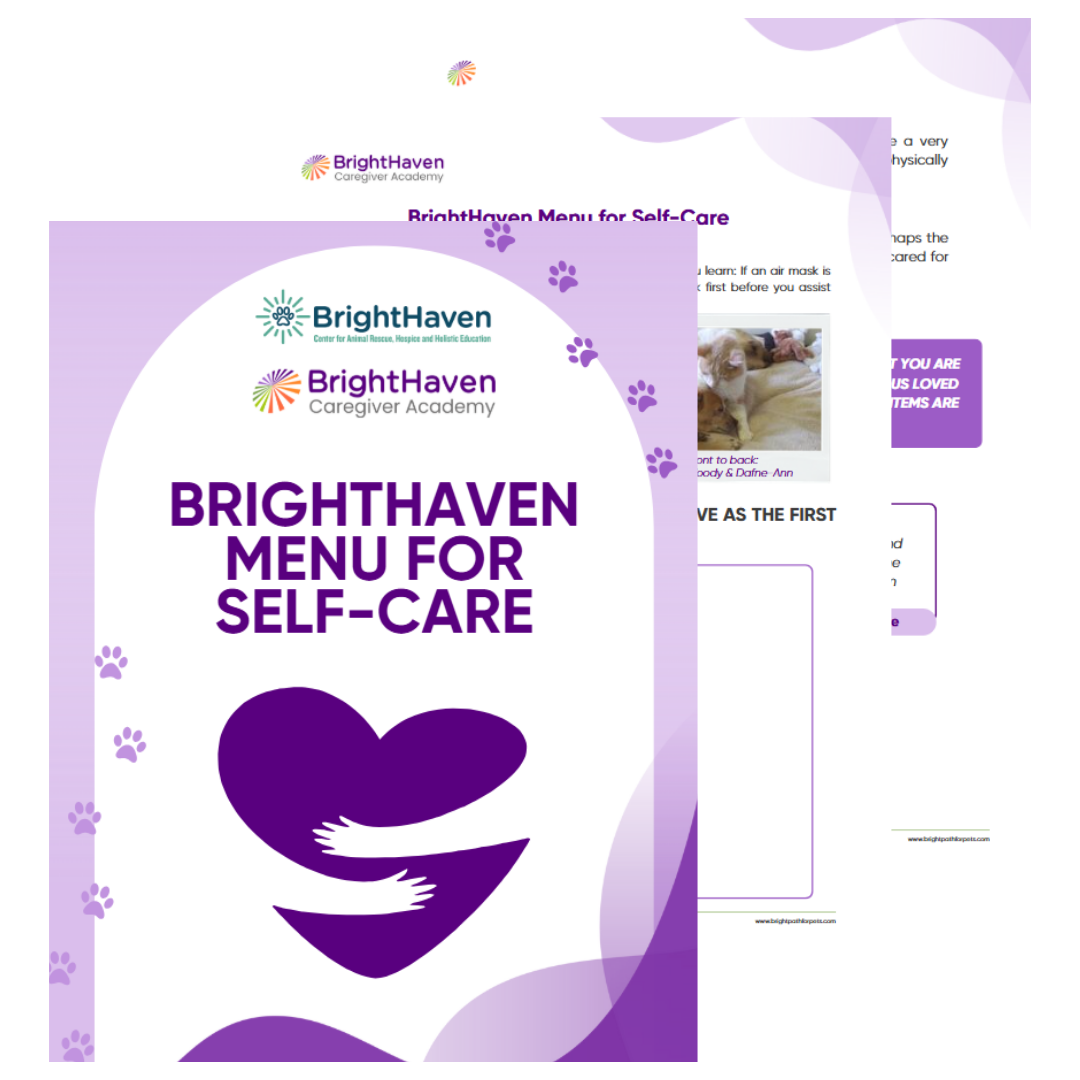
While our hearts focus on the animals we love, caregivers need care too. The Menu for Self-Care was created as a companion guide for the humans who walk this journey. It reminds us that self-care is not selfish — it is essential.
Inside, you’ll find encouragement to:
- Love yourself as fully as you love your animal.
- Practice gratitude, presence, and acceptance.
- Breathe deeply, spend time in nature, and live in the moment.
- Release guilt and embrace courage in the caregiving process.
As BrightHaven founder Gail Pope has shared:
“If you go through this process with courage and grace, I promise that you will no longer fear death, and your perspective on life will be forever changed to one of acceptance and peace. What greater legacy can our animals leave us?”
This guide closes the circle by offering peace and resilience for the caregiver’s heart.
The Heart of Animal Hospice
Hospice care is a way of honoring the bond you share with your beloved companion by making each day as comfortable, joyful, and love-filled as possible. Rather than seeing this journey as an ending, we invite you to view it as part of a sacred circle—life, death, and love woven together. Through compassion, presence, and gentle guidance, we help you embrace the time you have, so that when the final moment comes, you and your pet are surrounded by peace and dignity.
This is the BrightHaven way and we welcome you into a community that honors not just the passing, but the precious journey of living fully until the very end.

Explore BrightHaven’s Educational Resources
At BrightHaven, knowledge reduces fear. We believe that learning about your options can ease anxiety and help pet parents make thoughtful decisions for the animals they love.
Educational resources
Articles and guides on animal hospice, holistic care, and compassionate support for pets with chronic or serious illness.
Personal Guidance with Gail Pope
Learn more about opportunities to connect with BrightHaven’s founder for individual guidance and support.
Courses and Educational Publications
Explore BrightHaven’s learning materials and free downloadable resources.